Getting a personal loan can be difficult when your credit history is not strong. However, a low score does not always mean you have no borrowing options. How to Get a Personal Loan with a Low CIBIL Score depends on several factors, including your income, repayment capacity, existing debts, and the lender’s eligibility rules. A lender may consider your overall financial profile rather than relying on your score alone.
This guide explains How to Get a Personal Loan with a Low CIBIL Score and what you can do before submitting an application. You will learn practical ways to improve your approval chances, what documents may be required, when a co-applicant or secured loan can help, and which mistakes could make borrowing more expensive. The goal is to help you make a careful and informed borrowing decision.
What Is a Low CIBIL Score?
A CIBIL Score is a three-digit summary of your credit history and ranges from 300 to 900. A higher score generally gives you better chances of getting credit, while a lower score can make lenders more cautious.
There is no single score that guarantees approval or rejection for every personal loan. Each lender sets its own credit policy and also considers income, employment, existing obligations, repayment history, and other information.
A low CIBIL Score may result from:
- Missed or late payments
- High credit card balances
- A history of overdue accounts
- Frequent applications for new credit
- A short credit history
- Problems with jointly held or guaranteed accounts
Your CIBIL Report provides more detail than the score itself. Reviewing it can help you identify the specific issues affecting your credit profile.
Can You Get a Personal Loan with Low CIBIL?
Yes, it may be possible, but approval can be more difficult and the loan terms may be less favorable. CIBIL states that some lenders may still offer loans to borrowers with low scores, potentially with higher interest rates or stricter conditions.
When considering How to Get a Personal Loan with a Low CIBIL Score, focus on your complete financial profile. A stable income and manageable existing debt can strengthen an application even when the credit score is weak.
Lenders commonly review:
- CIBIL Score and credit report
- Employment status and stability
- Income and repayment capacity
- Existing EMIs and debts
- Recent credit enquiries
- Bank statements and income documents
Because a personal loan is generally unsecured, lenders have no property or other collateral to rely on if the borrower defaults. This is why credit history and repayment capacity can carry significant weight.
Best Ways to Get a Loan with Low CIBIL
If you need financing despite a weak credit profile, concentrate on reducing the lender’s perceived risk. The right approach is to request an affordable amount, provide strong income evidence, and choose the loan structure carefully.
Show Stable Income and Employment
Stable employment can demonstrate that you have a reliable source of money for monthly repayments. Lenders may consider employment history, income level, and existing financial obligations when evaluating a personal loan application.
Prepare documents such as:
- Recent salary slips
- Bank statements
- Income tax documents where applicable
- Employment or business proof
- Valid KYC documents
Self-employed applicants may need financial statements, bank statements, and other income-related documents depending on the lender.
When considering How to Get a Personal Loan with a Low CIBIL Score, strong income documentation can help demonstrate that you can comfortably handle the proposed EMI.
Apply for a Smaller Loan Amount
Borrowing less can make repayment more manageable. It may also make your application more reasonable when your income or credit profile does not support a large unsecured loan.
Before applying, calculate the expected EMI and compare it with your existing monthly obligations. Do not choose an amount simply because a lender offers it.
For example, someone who needs ₹1 lakh should avoid applying for a substantially larger amount without a clear financial reason. A smaller and affordable loan can reduce repayment pressure.
Add a Co Applicant or Guarantor
A financially stronger co-applicant may improve an application because the lender can consider the co-applicant’s income and credit profile, subject to its policies.
A guarantor is different from a co-applicant. A guarantor agrees to take responsibility for the loan obligation if the borrower fails to repay. CIBIL notes that defaults on guaranteed loans can affect the guarantor’s own credit profile.
Therefore, never ask someone to guarantee a loan without clearly explaining the repayment obligation and risks.
Choose a Secured Loan Option
If an unsecured personal loan is difficult to obtain, consider whether a secured borrowing option is more appropriate. Secured loans involve an asset or other security acceptable to the lender.
Possible examples include certain loans against eligible assets. The exact options and conditions vary by lender.
A secured loan can reduce some lending risk, but it also creates a serious obligation. If you fail to repay according to the agreement, the pledged asset may be at risk.
| Option | Main Advantage | Main Risk |
| Smaller personal loan | Easier repayment | Lower borrowing capacity |
| Co-applicant | May strengthen application | Shared repayment responsibility |
| Guarantor | May support eligibility | Guarantor can face financial consequences |
| Secured loan | Asset may support borrowing | Collateral can be at risk |
Personal Loan Eligibility with Low CIBIL
Eligibility is not determined by your CIBIL Score alone. Lenders can consider your income, employment, current EMIs, credit history, documentation, and internal lending criteria.
For How to Get a Personal Loan with a Low CIBIL Score, start by checking whether you can comfortably afford the proposed EMI. A lender may be less comfortable with an application when existing debt already consumes a large portion of available income.
Typical documents may include:
- Identity and address proof
- PAN or other applicable KYC documents
- Salary slips or income proof
- Recent bank statements
- Employment details
- Income tax returns or financial statements for some self-employed applicants
CIBIL’s indicative checklist includes credit information, bank statements, KYC documents, and income statements, although individual lenders may require different documents.
Do not assume that meeting basic documentation requirements guarantees approval. The final decision belongs to the lender.
How to Improve Your CIBIL Score Before Applying
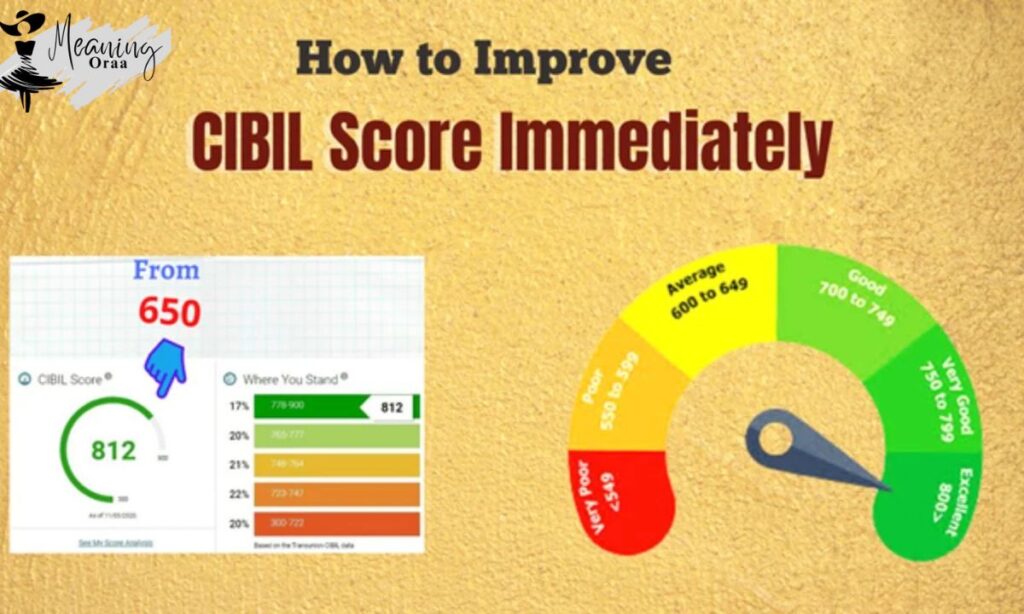
Improving your credit profile before applying can be more beneficial than submitting several applications immediately. CIBIL recommends paying dues on time, keeping balances under control, applying for new credit cautiously, maintaining an appropriate credit mix, and regularly reviewing your credit report.
Practical steps include:
- Pay all current EMIs on time. Payment history is an important part of your credit profile.
- Reduce outstanding credit card balances. High balances can indicate heavy dependence on credit.
- Avoid unnecessary loan applications. Multiple credit enquiries can affect how lenders view your credit activity.
- Check your CIBIL Report. Look for incorrect account information, payment records, or other discrepancies.
- Keep existing accounts in good standing. Closing or opening accounts without a clear reason may not immediately solve a weak credit profile.
- Monitor joint and guaranteed accounts. Missed payments on accounts where you share responsibility can affect your credit history.
If you are researching How to Get a Personal Loan with a Low CIBIL Score, remember that credit improvement is usually a process rather than an instant fix. Avoid companies or individuals promising guaranteed score increases or guaranteed loan approval.
Read More About This: https://meaningoraa.com/tattoo-ideas-for-men/
Common Mistakes to Avoid When Applying
The biggest mistake is applying for multiple loans without first understanding why previous applications may have failed. Repeated applications can create additional enquiries and may make your credit profile look more credit-seeking.
Avoid these common errors:
- Applying to many lenders at the same time
- Borrowing more than you can comfortably repay
- Ignoring processing fees and other charges
- Hiding existing loans or credit card obligations
- Providing incomplete or inconsistent documents
- Choosing a lender only because approval appears easy
- Agreeing to unclear repayment terms
- Using a loan to repeatedly cover unaffordable debt
When exploring How to Get a Personal Loan with a Low CIBIL Score, compare the total borrowing cost rather than focusing only on the advertised interest rate. CIBIL also advises borrowers to understand the cost and benefits carefully because personal loans can be relatively expensive forms of borrowing.
Read the loan agreement carefully. Check the interest rate, processing charges, repayment schedule, late-payment consequences, foreclosure or prepayment terms, and any other applicable fees.
Frequently Asked Questions
Can I get a personal loan with a 600 CIBIL Score?
How to Get a Personal Loan with a Low CIBIL Score depends on the lender’s policy and your overall financial profile.
A low score can reduce options, but stable income and manageable debt may still help.
What is the easiest way to get a loan with low CIBIL?
There is no guaranteed easiest route because lenders use different eligibility criteria.
A smaller amount, strong income proof, or suitable co-applicant may improve your chances.
Does applying for many loans improve my chances?
No, multiple applications can create additional credit enquiries and may weaken your application profile.
Compare suitable lenders first and apply selectively.
Can a co-applicant help with a low CIBIL Score?
A co-applicant with stronger finances may support an application, depending on the lender’s rules.
Both parties should understand that shared borrowing creates repayment responsibilities.
How quickly can I improve my CIBIL Score?
There is no fixed timeframe because improvement depends on your credit history and repayment behavior.
Consistent on-time payments and responsible credit use can help build a stronger profile over time.
Conclusion
When deciding How to Get a Personal Loan with a Low CIBIL Score, the safest approach is to understand your credit position before borrowing. Check your report, correct genuine errors, reduce expensive outstanding debt, and calculate an EMI that fits your income. CIBIL allows consumers to access a free CIBIL Score and Report once during a calendar year.
A low score should not encourage you to accept any loan at any cost. Compare lenders, read the complete terms, and consider whether a secured option, smaller amount, or co-applicant makes more sense for your situation.

Karina Smith is a passionate writer and language enthusiast who loves exploring words, meanings, and sharing helpful knowledge with readers.